- The fragmented stack is an industry-wide default, not an exception
- Ticketing data that stops at the door
- A POS that operates without context
- VIP management without a system
- What integration changes in practice: How Fourvenues connects everything
Turn insights into smarter operations
Get startedShare
Tools & features
9 min read
May 18, 2026
What happens when your POS, ticketing and VIP don't talk to each other
Most live entertainment venues are running a restaurant POS that was never built for their operation. It handles transactions, but it has no concept of ticket tiers, VIP minimum spends, bottle service packages, or event-based fees and taxes. Fourvenues is built specifically for live music events, which means ticketing, reservations, and POS share the same data from the first ticket sold to the last table closed.
The fragmented stack is an industry-wide default, not an exception
Most nightlife venues didn't set out to build a fragmented technology infrastructure. It happened incrementally. When each system operates independently, the data it generates is trapped within it. Your ticketing platform holds attendance and sales data. Your POS holds consumption data. Your VIP management (whether it lives in a spreadsheet, a CRM, or a messaging app) holds reservation and guest data because these systems don't communicate, no single source of truth exists for the event's full financial picture.
Industry veterans consistently point to the same consequence: managing too many disconnected tools creates more operational complexity than it resolves, leading to integration failures and increased burden on venue staff. For a high-volume events business, that complexity has a direct cost.
Ticketing data that stops at the door
When a guest purchases a ticket online, that transaction generates a set of data points, in the best scenario: who they are, when they bought, at what price tier, through which channel. In a connected system, that information follows the guest through the entire visit. In a fragmented stack, it stops at the door scanner.
The practical consequence is twofold. First, the operator loses the ability to connect in-venue spend to individual customer profiles, which means no visibility into who the high-value guests actually are beyond their table reservation or ticket purchase. Second, every marketing campaign starts from scratch, because the CRM has no record of who attended or how they behaved. In a business where repeat attendance is a primary revenue driver, that gap is significant.
A POS that operates without context
A point-of-sale system that runs independently from reservations and ticketing is processing transactions without context. The terminal knows what was ordered and what was paid. It doesn't know that the table has a bottle service minimum, that the guest pre-purchased a package online, or that this is their fourth visit this month.
That missing context has operational consequences at every level. Floor staff can't track table minimums in real time, which means minimums go unmonitored during service and disputes arise at close. Fee and tax configurations tied to specific events or zones can't be applied automatically, requiring manual correction after the fact.
Research consistently shows that integrating POS and ticketing into a single system reduces human error, generates a unified transaction record, and significantly simplifies post-event financial reconciliation.
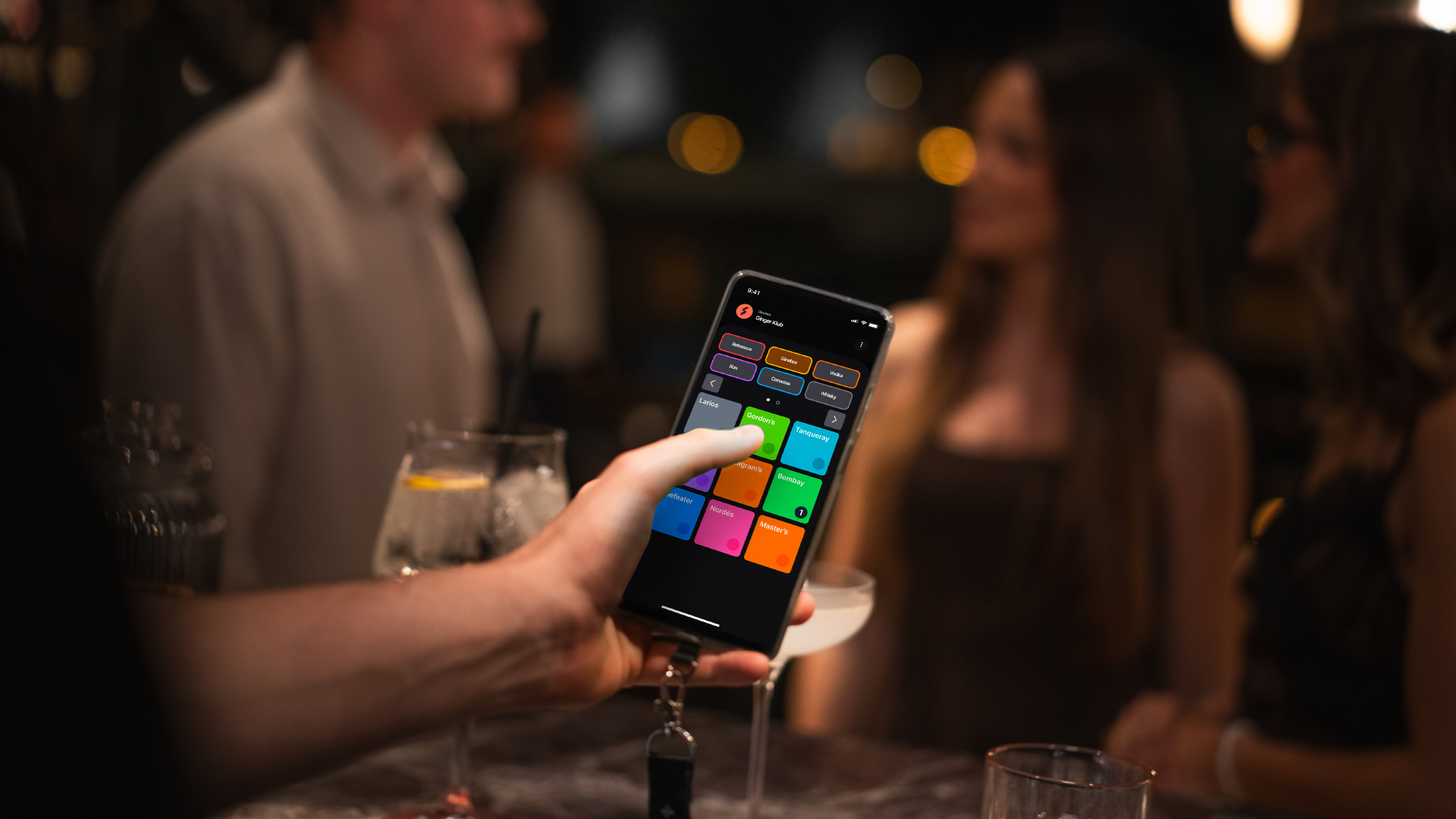
The Fourvenues POS addresses this directly. The system includes a mobile handheld ordering tool that allows floor staff to take orders at the table and send them directly to the bar, without having to physically return to the terminal. The order routes instantly. The server stays on the floor. At the same time, fees and taxes are configured at the platform level and applied automatically by event or venue zone, so no manual correction is needed at close. And because the POS is fully integrated with reservations and ticketing, every table order is mapped against the guest's booking from the moment service begins.
VIP management without a system
Guest list management over WhatsApp. VIP reservations in a shared spreadsheet. Minimum spends tracked by a host on a notepad. These are not edge cases, they are the operational standard at a large share of nightlife venues and festivals.
The issue is that they produce no usable data. When VIP reservation management is disconnected from the POS, there is no automated tracking of table spend against minimum commitments. There is no historical record of which guests spend most or return most frequently. There is no basis for evaluating promoter performance beyond ticket count. And there is no way to identify, at scale, which elements of the VIP offer are driving revenue.
Operators who consolidate promoter tracking, guest list management, and real-time inventory monitoring into a unified platform gain the operational capacity to make instant staffing and resource decisions as the event unfolds, a level of control that fragmented tools simply cannot support.
What integration changes in practice: How Fourvenues connects everything
The operational difference between a fragmented stack and a connected platform is most visible at two moments: during the night and at close.
During the night, a unified system means that every staff member is working from the same data. This is where Fourvenues operates as a single source of truth across all revenue streams. Reservation details, package terms, minimum spend commitments, and live consumption figures are visible at every point of service, not reconstructed afterward.
On the floor, servers use an interactive map with the Fourvenues Display System, which allows staff to take orders directly at the table and route them instantly to the bar. The server never leaves the floor. The order registers in the system the moment it's placed, mapped automatically against the guest's reservation. Minimum spend tracking updates in real time in the interactive map and in the POS at the bar. If a table is approaching their limit, the system flags it without anyone having to manually check.
At the bar and back office, fees and taxes configured at the platform level apply automatically by zone, no manual adjustment at close, no reconciliation across separate systems. Every transaction, whether it originated from an online ticket sale, a door purchase, a VIP reservation closes from the same platform. And because the platform now surfaces a live financial report for every POS service while the event is still running, operations, support and management teams stop waiting until the end of the night to understand what is actually happening with revenue.
The result is a closing report that is complete and accurate and a customer record that captures the full value of every guest who walked through the door.
Live POS financials: from end-of-night surprise to in-event decisions
Most operators are used to a binary financial picture: you operate during the night, and you find out how it went the next morning. By then, the decisions you could have made are gone. The bar that ran below expectation can no longer be reinforced. The payment method that didn't work as projected can no longer be corrected. The VIP table that fell short of its minimum has already left.
The live financial report inside the Fourvenues POS removes that delay. While the event is still running, operations, support and management teams have live visibility into the financial performance of every POS service. That information was always there in the data; what's new is that you don't have to wait until reconciliation to see it. The point is what you do with it during the night.
Reading the data: what you actually get in real time
Before you can act on the data, you need to know what's available. The live financial report consolidates, by POS service and updated continuously:
- Total revenue collected, broken down by payment method (cash, card, integrated cashless, prepaid packages).
- Performance by bar and by cash drawer, so you can see exactly which point of service is producing revenue and which is underperforming.
- Performance by device, which tells you how each terminal and handheld is being used during service.
- Live VIP table consumption, mapped against the minimum spend committed at booking, with real-time tracking of how each table is progressing.
Acting on the data: in-event decisions that protect margin
This is where the consulting layer matters. A live financial dashboard is useful because each number maps to a decision you can make before the night ends.
- Reallocating staff to where the revenue actually is. If one bar is generating 60% of the revenue with 30% of your bar team, you have a staffing imbalance. Live revenue-by-bar data lets you rebalance staff between zones during service.
- Catching VIP tables before they close below minimum. A table that's tracking at 40% of its committed minimum with one hour left is a service opportunity. The host can intervene proactively, offering an additional bottle or upgrade rather than facing a dispute when the bill arrives. Live consumption tracking turns minimum spend from a compliance check into a revenue lever.
- Adjusting the cashless or payment mix in real time. If integrated cashless is converting better than expected, you can push staff to recommend it more actively at the bar. If card payments are dragging service times at one specific terminal, you can route differently for the rest of the night. Payment method performance is operational data.
- Identifying device or terminal underperformance while it's still fixable. A handheld that's processed half the orders of its peers usually points to one of three things: a staff member who needs support, a connectivity issue at that zone, or a routing problem. All three are recoverable during the night if you see them at 1 AM. None of them are recoverable the morning after.
- Preparing reconciliation while the event is still active. Post-event reconciliation is the most reliable source of friction between operations and finance. Live data lets the support and finance teams flag discrepancies as they happen, not three days later when no one remembers what happened at that specific bar at that specific time.
You move from operating blind and reviewing later, to operating with live financial context. That's the difference between a POS that processes transactions and an operating system that informs decisions.
How to assess whether your current stack has a problem
The fragmented stack rarely produces a single, visible failure. It produces a pattern of small discrepancies. These issues are easy to attribute to individual operational errors rather than to a structural technology problem.
A useful diagnostic is to map the data flow of a single night from first ticket sale to closing report, and identify every point at which information has to be manually transferred between systems. Each of those points is a gap. Those gaps prevent operators from knowing their true acquisition cost per guest, turn financial reconciliation into a significant administrative burden, and create unnecessary friction in the customer's path to spending.
If the answer involves more than one platform, a spreadsheet, or a manual process, the stack has a fragmentation problem. The question then is not whether to address it, but how quickly a unified system would recover the margin that is currently leaking through those gaps.
The takeaway
Technology fragmentation in nightlife is not a consequence of bad decisions. It is the predictable result of adding tools reactively to solve immediate problems. The cost only becomes visible when you compare what a connected system can tell you against what your current stack actually delivers.
Ready to evolve your operating system with Fourvenues?
Request information